
Exit

Author Archives: tmswebsiteadmin

  1. The Impact of Military EMI Filters on Military Operations

    Comments Off on The Impact of Military EMI Filters on Military Operations

    Military electromagnetic interference (EMI) filters are crucial in aerospace and military applications. These specialized electronic components ensure all equipment adheres to strict emission requirements, filtering out electrical interference or noise that could disrupt the functionality of critical electronic systems. Keep reading to learn about the impact of military EMI filters on military operations, including their applications and performance capabilities.

    Military Uses for EMI Filters 

    Military operations use EMI filters for several key reasons, from protecting signal integrity to shielding devices in various operating environments.

    Keeping Communication Channels Open

    EMI shielding helps keep communication lines open and secure in military operations. Higher frequencies are common in today’s military devices, leading to an increased opportunity for interference. EMI shielding tackles this challenge by keeping military networks isolated from other civilian and foreign military networks. Keeping the networks apart protects the integrity of the signal while eliminating unwanted recipients from the communications.

    EMI filters allow military personnel to trust incoming intel, speeding up the communication process by removing jammed signals to prevent enemies from leveraging confidential information.

    Maintain Proper Functioning of Complex Electronics

    EMI shielding maintains functionality of military devices outside of the typical communicative uses. While large vehicles and tanks may seem indestructible, EMI can at times disrupt internal components, impeding overall functionality. Drones and other smaller devices are also susceptible to EMI interference.

    In addition to interfering with the performance of military vehicles and sensitive systems, EMI has the potential to negatively impact large-scale power grids in industrial setting. It is vital to create a barrier for both the input and output power using EMI Filtering to meet the demands of military usage. This type of EMI shielding can help prevent malfunction and miscommunication, protecting soldiers and civilians alike.

    Captor Corporation EMI Filters for Military Use

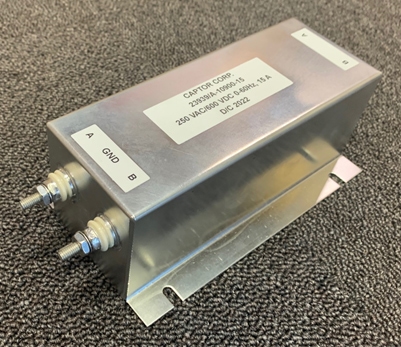
    Captor Corporation manufactures several types of COTS MIL-STD-461 EMI filtering solutions to withstand extreme environments frequently seen in military applications. These can mitigate conducted emissions ranging between 10 KHz and 10 MHz while staying at or below the maximum capacitance for 50Hz – 400Hz input power frequencies to meet various demands.:

    • Single-phase EMI filters. Our new line of COTS EMI filters is specifically engineered for use with single-phase power lines in AC and DC applications. They can alleviate conducted emissions in line with MIL-STD-461 CE102 standards, industry standards, and key electrical requirements.
    • Three-phase Wye EMI filters. Our three-phase Wye EMI filters are designed to mitigate conducted emissions in accordance with MIL-STD-461 CE102 standards, making them suitable for a range of ground, air, and sea applications. These filter assemblies integrate line-to-ground feed-through capacitors, with additional shielding effectively isolating the output and input compartments.
    • Three-phase Delta EMI filters. Captor Corporation offers three-phase EMI filters for use with Delta 120/208 VAC power lines, mitigating conducted emissions in alignment with MIL-STD-461 CE102 requirements. For 254/440 VAC power lines, we recommend COTS MIL-STD-461 three-phase Delta EMI filters.

    Specific design configurations are available depending on the application and filter type. Our custom EMI filters can include various components like metal oxide varistors and circuit breakers, along with military connectors for input/output connections when requested.

    Contact Captor Corporation for High-Quality EMI Filters for Military Operations

    Since 1965, Captor Corporation has been providing customers with innovative solutions for aerospace and military applications. As a trusted manufacturer of custom EMI military filters, we offer prompt delivery of high-quality, competitively-priced components. We also manufacture standard military filters that comply with MIL-STD-461 and RTCA/DO-160 regulations. We keep production, sales, and engineering services under one roof to ensure every product we deliver meets our customers’ precise specifications.

    Contact us or request a quote to learn how military EMI filters by Captor Corporation can protect sensitive equipment, enhance operational reliability, and ensure mission success in demanding environments.

  2. The Future of EMI Filtering Technology

    Comments Off on The Future of EMI Filtering Technology

    Modern equipment increasingly relies on modern EMI filtering solutions. As spaces become more crowded with high-power electrical systems, high-performance noise filtering and noise blocking solutions are required that can either contain their own noise or protect it from external noise.

    Captor Corporation specializes in developing cutting-edge EMI filtering solutions. Since 1965, we’ve focused on electronic filters for multiple industries, including military and aerospace communications. Read on to learn about some emerging trends in EMI filtering technology and how ongoing developments can impact different industries and applications.

    Integration of Simulation and Modeling

    One of the key requirements of developing EMI filters is testing. Electromagnetic compatibility testing, or EMC testing, measures the performance of devices in specific settings. The test receivers measure electromagnetic emissions and noise to see what levels of interference are present and how susceptible technology may be to that interference.

    Engineers have developed various simulations and modeling tools for virtual design testing and can use these advanced EMC testing capabilities to:

    • Design better EMI filters
    • Troubleshoot and optimize existing EMI filter designs
    • Reduce expenses during the design phases by testing EMI before producing physical prototypes
    • Streamline the development process by cutting down on prototype cycles and conducting fast virtual tests
    • Create hypothetical test cases to ascertain how EMI and EMI filters will act in different environments and make predictions

    More efficient testing can save companies money and time, and it can lead to more advanced designs and solutions. By conducting more experiments and product testing in virtual simulations, engineers can implement increasingly small design refinements, measure results in the anticipated conditions, and create detailed records.

    Higher Frequency Range

    One significant trend in EMI test receivers is the expanding frequency ranges. As electronic devices operate at higher frequencies, industries need EMI test receivers that can cover a broader spectrum to accurately capture and analyze emissions. This will drive further development of existing technologies, which will likely be able to evaluate electromagnetic emissions in millimeter-waves and Terahertz frequency bands.

    Engineers will also need to develop specialized EMI test receivers for 5G. This wireless technology requires more advanced shielding, as 5G operates at high frequencies that current solutions can’t fully protect against. Future shielding solutions will need to block high-frequency noise in infrastructural assemblies, industrial systems, and smaller consumer devices to prevent interference and maintain device functionality.

    Advanced Analysis Tools

    The foundation of better EMI shielding lies in using better analysis tools. Engineers are creating advanced EMI test receivers that don’t just pick up a broader frequency range but can also use derived test data to point toward future solutions. For example, advanced analysis tools will use AI and machine learning to analyze interference in real time. EMI shields can then have adjusted filter settings that instantaneously respond to fluctuating interference sources.

    AI-powered analysis can also provide the following:

    • Auto-classified signal algorithms
    • Better spectrogram displays
    • Faster troubleshooting
    • A greater understanding of emissions characteristics
    • More robust abatement plans based on more data
    • Smart or automated noise reduction systems
    • Time-domain analysis on a finer scale

    All of these advanced AI and analytic capabilities can give researchers and product developers the insight they need to zero in on cutting-edge designs that help with higher frequencies, electrical assemblies in disruptive conditions, and electrical systems that operate across a wide network. Embedding AI into the filter assemblies themselves can also facilitate new solutions through granular filtration control.

    EMI Filters From Captor Corporation

    While EMI filtering technology has improved over the years, the demand continues to grow for more advanced capabilities for testing, data analysis, and handling a higher frequency range. At Captor Corporation, we’re continually developing innovative EMI filters that can handle the challenges electrical assemblies face in defense and aerospace applications. For all of our products, we use robust testing protocols and adhere to industry-specific standards.

    Reach out today to learn more about our broad range of EMI filter solutions and find the right products for your project. You can also request custom solutions for specialty applications.

  3. Captor Corporation Announces Justin Dorsten and Chico General as valuable additions to our Design/Sales Engineer Team

    Comments Off on Captor Corporation Announces Justin Dorsten and Chico General as valuable additions to our Design/Sales Engineer Team
    Chico General

    Tipp City, OH. October, 2024 – Captor Corporation, a leading manufacturer of EMI Filters, HEMP Filters, Tempest Filters, Cable Assemblies, Build-to-print, and Contract Manufacturing is pleased to announce that Justin Dorsten joined our team in 2023 and we recently added Chico General to strengthen our superior customer service and engineering services.

    Justin Dorsten graduated from the University of Cincinnati with a bachelor’s degree in electrical engineering. Justin, since March of 2023, has excelled in his aptitude for bringing new products to realization and optimizing new approaches. He is a trusted customer ambassador and now a valuable co-trainer for Chico.

    Chico graduated from Wright State University with a bachelor’s degree in electrical engineering. He brings a energizing new perspective to solving many difficult problems.

    These two new additions have added to our already strong engineering team of Brian Monnin, Rafik Stepanian, and Ryan Sollmann. Scott Timms, our President, started his career as a design/sales engineer and assists with his many years of experience to our well-rounded team. Captor works with all the Prime Defense Contractors offering solutions for stringent EMI compliance standards and build to print assemblies.

    “Justin has exceeded our expectations, with the addition of Chico and Justin’s willingness to take on the big task of training makes us confident looking towards the future and customer reliance on Captor. Chico, in his short time with us, has provided the encouraging attention to detail for learning and retaining”, says Scott Timms, President.

  4. Types of EMI Filters

    Comments Off on Types of EMI Filters
    Click to ExpandTypes of EMI Filters

    EMI filters prevent the disruption of the proper performance of electronic circuits caused by electromagnetic interference (EMI). Additionally, filters provide protection against your system causing feedback on power lines and signal lines that may render your product non-compliant to MIL-STD-461 and DO-160 requirements. The right EMI filter depends on your specific design requirements and EMI filtering needs.

    Established in 1965, Captor Corporation is a leading provider of high-performing EMI filters. Our custom solutions are often delivered faster and at a more competitive price point than standard off the shelf options provided by our competitors. Our capabilities allow us to deliver a wide variety of EMI filters tailored to the needs of our customers.

    What Are the Two Types of EMI?

    Electromagnetic interference occurs when two or more electrical circuits interfere with each other. EMI can be categorized into two types based on its coupling mechanism (the way electrical energy transfers from one circuit to another):

    • Conducted EMI. This type of interference is passed along wires and cables from a source to a receiver. This process is engaged by switching currents within the device itself or from external sources like power lines or nearby equipment.
    • Radiated EMI. This type of interference is the most common and is passed through the air as electromagnetic waves. These fields are generated by almost any electrical or electronic device. It can be emitted from your device or come from external sources like radio waves, electrical equipment, and natural occurrences such as lightning, electric storms, and sun flares.

    Both types of EMI can disrupt the proper functioning of your electronic designs causing malfunctions ranging from mild to hazardous. Fortunately, different types of EMI filters work to address each kind of issue.

    Passive EMI Filters

    Passive filters work by absorbing unwanted energy and reducing emissions of a power electronic circuit. They rely on passive components like capacitors, inductors, and resistors to reduce EMI.

    Passive EMI filters are generally more affordable than active filters. They have a simpler design that makes them easier to implement, requiring less expertise from the operator. Passive filters also offer the advantage of lower power consumption as they don’t require any additional power to operate.

    Three types of passive EMI filters are available:

    • Single-Stage Filters. Typically composed of a single capacitor and inductor (L-Circuit Filter) arranged in a specific configuration, these are the simplest EMI filters. Captor often utilizes feedthrough capacitors in our designs and brochure products to provide high frequency suppression.
    • Multiple-Stage Filters. These filters achieve better noise suppression by using multiple stages of filtering components (Pi-Circuit, Double Pi-Circuit, T- Circuit, Double or Triple-L Circuit). Multiple components combined with our feedthrough capacitors offer performance lower in the frequency spectrum and then hold the filtering up into to the higher frequencies.
    • Feed-Through Capacitors. By using a capacitive element built around a central conductor (C-Circuit Filter), these filters allow desired signals to pass while suppressing unwanted noise. The capacitance level determines which frequency the unit begins suppressing and then will hold out to the high frequencies.

    Which Type of EMI Filter is Best for My Design?

    Am I filtering a power supply with a certain switching frequency?

    Am I filtering for a motor load?

    Am I filtering for a condenser load?

    Am I filtering for a radar load?

    What is your load?

    Do I need lightning protection?

    Do I need transient pulse protection?

    Do I need HEMP protection?

    We need to pay special attention to the above. The question Which Type of EMI Filter is Best for My Design? is not answered.

    Passive filters help control conducted emissions and are often the more cost-effective option. Passive filters can be used in appliances, electronic devices, power lines, and other applications battling, low to high-frequency electromagnetic noise.

    Whatever your design requirements, proper EMI filtering is crucial for ensuring electromagnetic compatibility (EMC) and compliance with key regulations.

    EMI Filters from Captor Corporation

    Captor Corporation is a leader in the field of EMI filters. Our custom solutions are tailored to your needs and often cost less than off-the-shelf options. We can help you choose the filter that will achieve optimal performance and minimize interference in your electronic systems.

    Request a quote to get an estimate for the EMI filters most likely to meet your needs and exceed your expectations.

  5. Applications of Standard EMI Filters From Captor Corporation

    Comments Off on Applications of Standard EMI Filters From Captor Corporation

    The rising prevalence of electronic devices across all industries reflects our technologically driven society as well as our increased need for electromagnetic interference (EMI) filters. Without the proper protection against EMI, critical electronic equipment can fail and result in disastrous consequences. It’s more important than ever to invest in reliable EMI filters that serve a broad range of applications.
    Here we’ll discuss what EMI filters are, what causes EMI, and the common applications of this essential equipment.

    What Are EMI Filters?

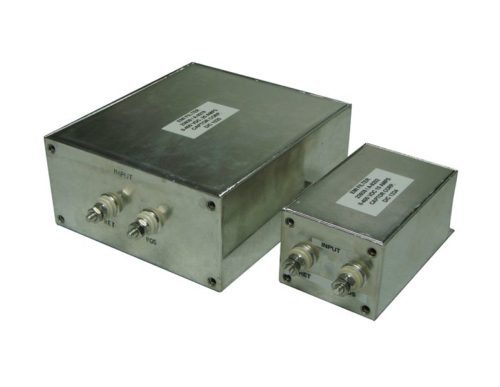
    MIL-COTS Filter

    An EMI filter is a device typically installed around power supplies and reduces unwanted harmonic energy when the electrical current switches. The EN/CE, FCC, and other military and commercial international EMI standards regulate these filters to minimize or eliminate unintended electronic noise that could disrupt the electronic’s operation. Military applications demand filtration of conducted emissions between 10 kHz to 18 GHz, and commercial applications typically require EMI filtration between 150 kHz and 30 MHz.

    EMI filters can be either passive or active and usually cover a specific range of frequencies. Most EMI filters use passive components, such as inductors and capacitors, because they can filter a broader frequency range.

    What Causes EMI?

    EMI is caused by conducted interference or radiated interference. Physical contact between conductors creates conducted EMI, while non-physical contact, also known as induction, creates radiated EMI. Higher frequencies are associated with radiated EMI, while lower frequencies are associated with conducted EMI.

    Where and How Are Standard EMI Filters Used?

    Most EMI is high-frequency noise, meaning that the signal’s sine waves are close together. EMI filters contain capacitors and inductors that suppress this noise. Capacitors limit direct current (DC), which carries most of the EMI into a device, and allows alternating current (AC) to pass through. Also called shunting capacitors, capacitors in EMI filters redirect DC within a specific high-frequency range away from a component or circuit. Shunting capacitors then feed this current into the system ground.

    Inductors hold magnetic energy as electric currents pass through them, reducing overall voltage. An optimal inductor eliminates the interference completely.

    EMI can come from many sources, including power lines, solar flares, power cords, appliances, and more. Thus, standard EMI filters are commonly used in:

    • Radio equipment
    • Lab equipment
    • Medical devices
    • Computers
    • Military equipment

    How Does a Standard EMI Filter Work?

    EMI in the form of radiated or conducted emissions can be minimized or eliminated by standard EMI filters. The filter’s capacitor creates a low-impedance path to redirect high-frequency signals away from the input. The noise is diverted either back to the power supply or to the ground connection.

    Standard EMI Filters From Captor Corporation

    EMI filters are essential in reducing electromagnetic interference in electronic devices. They block high-frequency electrical signals so that the device can function without interruption or malfunction.

    At Captor Corporation, we offer a variety of custom and standard EMI filters that can help meet the needs of customers in diverse industries. Request a quote today or contact us at 937-667-8484 to learn more about our products and capabilities.

  6. Why Are EMI Filters Important?

    Comments Off on Why Are EMI Filters Important?

    EMI, or electromagnetic interference, is any electrical or magnetic force that impedes signal flow. This interference can degrade the quality of communications transmissions, hinder the flow of electricity, and even damage the affected equipment. Both narrowband interference, which is caused by human activity, and broadband emissions, which can be either human or naturally caused, are forms of EMI.

    EMI filters are devices and modules that directly counter the effects of interference to stabilize the electrical flow or signal transmission, thus protecting the integrity of the system or device.

    Dangers of EMI

    Uncontrolled EMI presents many dangers to both the electrical devices being impacted by the interference and the signal itself. Damage can be either temporary or permanent, but even temporary effects can be catastrophic if it interferes with critical components to everyday life, such as medical equipment or military communications. EMI can:

    • Cause damage to electronics: Specifically, residential and commercial electronics, such as microwaves, refrigerators, and television systems, are vulnerable to damage from EMI. Temporary interference may cause systems to malfunction and over- or under-power devices, which can degrade the machinery’s mechanical components.
    • Cause equipment to fail: When EMI blocks communication signal transmissions, it can make cell phones and other mobile devices fail. While this may be simply inconvenient in many residential contexts, it can be costly for employees and businesses and outright dire for hospitals, municipal facilities, and military installations. Some medical devices potentially vulnerable to EMI include pacemakers, hearing aids, and life support sensors.
    • Disrupt wireless communication: EMI can interfere with large-scale radio and television transmissions by inhibiting satellites. Commercial telecommunications systems may also suffer from unreliability, poor sound quality, and slow performance.
    • Interrupt power supply: EMI can be powerful enough to interfere with the power grid and localized electricity stations. It also can cause power failures for independent systems, such as military installations, mobile and remote sites.
    • Result in data loss and electronics malfunctions: When computers and cloud-based interactions are impeded, even for just a second, data can become lost and unrecoverable.

    Each of these problems can have great consequences for the systems to which they are a part.

    What Is an EMI Filter?

    Where Does EMI Come From?

    Like we briefly discussed earlier, there are two main sources, or types, of EMI: narrowband and broadband. Another way to categorize EMI is into human-made and natural sources of interference.

    Man-Made EMI

    In complex electronic systems or systems in crowded environments, such as hospitals or cities, technology can interfere with itself, resulting in man-made EMI. For example, some components within a computer may cause EMI, which interferes with more vulnerable components in the same computer. Alternatively, actively working medical equipment can interfere with sensors in a hospital room. Interference from other electronics in a shared space can be common.

    Other man-made sources of EMI include more industrial ones, such as powerlines, generators, television, radio and satellite transmission, and operating systems for railroads and mass transit.

    Natural EMI

    Natural sources of EMI come from weather and cosmic effects. Common origins of EMI include lightning strikes, heavy storms, and cosmic noise. Even static electricity can cause natural EMI.

    <Explore the difference between EMI and EMC.>

    Choose Captor Corporation for EMI Filters

    EMI filters can reduce or eliminate this issue. At Captor Corporation, we specialize in creating standard and custom EMI filters for a range of electronic devices, including aerospace and military EMI filters. Each of our products is designed to keep critical systems performing in optimal and consistent condition. Browse our EMI filters portfolio page to learn more about our custom EMI filter experience.

  7. EMI vs. EMC: What’s the Difference?

    Comments Off on EMI vs. EMC: What’s the Difference?

    EMI filter

    Electromagnetic interference (EMI) and electromagnetic compatibility (EMC) are both important considerations when working with electronic components. EMI is caused by electromagnetic emissions that can disrupt the function of electronic devices and radio frequency (RF) systems. These devices and systems must be properly shielded from electromagnetic radiation for them to work well. EMC measures how well these devices and systems can work in the presence of disruptive electromagnetic interference.

    What is EMI?

    Electromagnetic interference often manifests as undesirable noise. It may also lead to erratic or disrupted function of electrical, electronic, and RF systems. There are four types of EMI:

    • Conducted EMI EMI that flows through wires and is caused by physical contact with the source of EMI.
    • Common Mode EMI – A high-frequency EMI that flows in the same direction through one or more conductors.
    • Differential Mode EMI A low-frequency EMI that flows in an opposite direction though adjacent wires.
    • Radiated EMI The most common type of EMI, caused by radiating electromagnetic fields. Common manifestations of radiated EMI include static noise on AM/FM radio receivers and “snow” on TV monitors.

    Here are some of the most common sources of EMI:

    • Power generating equipment and peripherals, such as generators, power supplies, voltage regulators, switches and relays, battery chargers, and high voltage electrical transmission lines.
    • Devices operating at high frequencies, like oscillators, computing devices, radios, radar, and sonar equipment.
    • Machines that use both high voltage and high frequencies, including motors and ignition systems.

    What is EMC?

    Electromagnetic compatibility of an electrical, electronic, or RF device has two facets:

    • The ability to work properly in the presence of electromagnetic radiation.
    • The ability to not generate additional EMI that affects the operation of other devices in its vicinity.

    The EMC of a device can be improved through good design, shielding, and EMI filtering. A device’s EMC can be measured through compliance testing using dedicated test systems that consist of antennas, near field probes, and spectrum analyzers. Even though EMC testing can be expensive, it is essential to ensure that a design will function properly and won’t generate disruptive electromagnetic interference.

    <Learn why EMI filters are critical in electric devices.>

    EMI and EMC Compliance

    EMI and EMC compliance standards are not uniform around the world. Different regulatory bodies each have their own specific standards. For example, the compliance standards in the European Union are different from those in the United States. To further complicate matters, the U.S. military uses stricter standards than commercial industries. Even commercial compliance standards often vary depending on the specific industry and the end use of the device.

    For reference, here are some of the most common compliance standards that must be met:

    • FCC Part 15 specifies U.S. EMC testing standards for consumer devices.
    • Military EMC testing standards can be found in MIL-STD 461 and MIL-STD 464.
    • In the EU, specifications by the ISO, IEC, CISPR, and other similar agencies govern EMI and EMC compliance.

    Testing for compliance has to cover both immunity and emissions:

    • Immunity testing covers the susceptibility of the device to EMI, and whether it functions as designed in the presence of EMI of specified intensities, both continuously and intermittently.
    • Emissions testing ensures that any EMI emanating from a device remains within specified limits so that it won’t cause ancillary devices to function incorrectly. Since EMI may occur through both conduction and radiation, a comprehensive emissions testing scenario must cover conducted EMI as well as radiated EMI.

    What Is an EMI Filter?

    EMI Solutions from Captor Corporation

    Captor Corporation has been a leading supplier of electronic filters for aerospace, military, and other applications for more than 55 years. Our team of expert engineers and technicians specialize in all aspects of electronic filter design and manufacturing, including reverse engineering of electrical and electronic circuits. We frequently custom design filters to fix products that fail EMI and EMC compliance tests.

    You can learn more about Captor’s capabilities for designing standard and custom EMI filters from these links:

    For more information about EMI and EMC and appropriate filter solutions from Captor Corporation, please request a quote today.

  8. Captor Corporation Announces Release of MIL-COTS EMI Filter Line

    Comments Off on Captor Corporation Announces Release of MIL-COTS EMI Filter Line

    Captor-Corporation

    Tipp City, OH. May 2020 – Captor Corporation is excited to announce the release of our MIL-COTS EMI Filter series. The new series is available in AC Single Phase (250VAC), Three Phase Delta (120/208VAC), Three Phase Delta (254/440VAC), Three Phase Wye (254/440VAC). The different voltage levels can be supplied for 50/60 Hz or 400 Hz applications. The filters feature low capacitance to ground to meet MIL-STD-461 Navy applications.

    Captor also offers the option of modifying the filters to meet your specific mechanical and power requirements. Our experienced Engineering and Manufacturing team will design the modified COTS at no extra cost to the customer and offer competitive delivery times.

    “We are extremely pleased with the initial interest from our customers concerning this product line. Not only are we selling them right out of the catalog, but we have already tailored many filters to fit the exact application,” says Scott Timms, President.

  9. Captor Corporation Receives Raytheon IDS Supplier Excellence Award

    Comments Off on Captor Corporation Receives Raytheon IDS Supplier Excellence Award

    Raytheon’s Integrated Defense Systems business established the annual Supplier Excellence Awards program to recognize suppliers who have provided outstanding service and partnership in exceeding customer requirements. Award candidates are judged on certain criteria, including overall quality and on-time delivery. Captor Corporation was one of 86 companies recognized by Raytheon’s Integrated Defense Systems business for 4-Star honors.

  10. Captor Corporation Announces Rafik Stepanian as Chief Engineer

    Comments Off on Captor Corporation Announces Rafik Stepanian as Chief Engineer

    Tipp City, OH. April 2019 – Captor Corporation, a leading manufacturer of EMI Filters, HEMP Filters, Tempest Filters, Cable Assemblies and Contract Manufacturing is pleased to announce Rafik Stepanian as Chief Engineer.  Rafik supports the Tipp City manufacturing facility and will also maintain an office and lab in Philadelphia.

    With over 25 years of experience in the EMC/EMI industry Rafik possesses an exceptional knowledge of filter design and EMI compliance testing.  He has worked with all the Prime Defense Contractors offering solutions for stringent EMI compliance standards. Commercial aviation, industrial and medical customers have also routinely seek out Rafik’s expertise for their challenging projects.

    Rafik’s diverse experience includes client account management, project, contract and product management as well as manufacturing process optimization.  He is also available for on-site EMI consulting/training for customer engineering teams.

    “Captor is excited to welcome Rafik to our team. With his vast experience and knowledge, we have expanded our ability to bring new solutions to the marketplace. This will benefit not only Captor, but all of our customers and future clients,” says Scott Timms, President.